The Future of Shopping: What is Agentic Commerce?
In the early days of e-commerce, we spent hours scrolling through static pages. Then came the era of personalization. Now, we move beyond suggestions and into autonomy.
In the early days of e-commerce, we spent hours scrolling through static pages. Then came the era of personalization. Now, we move beyond suggestions and into autonomy.
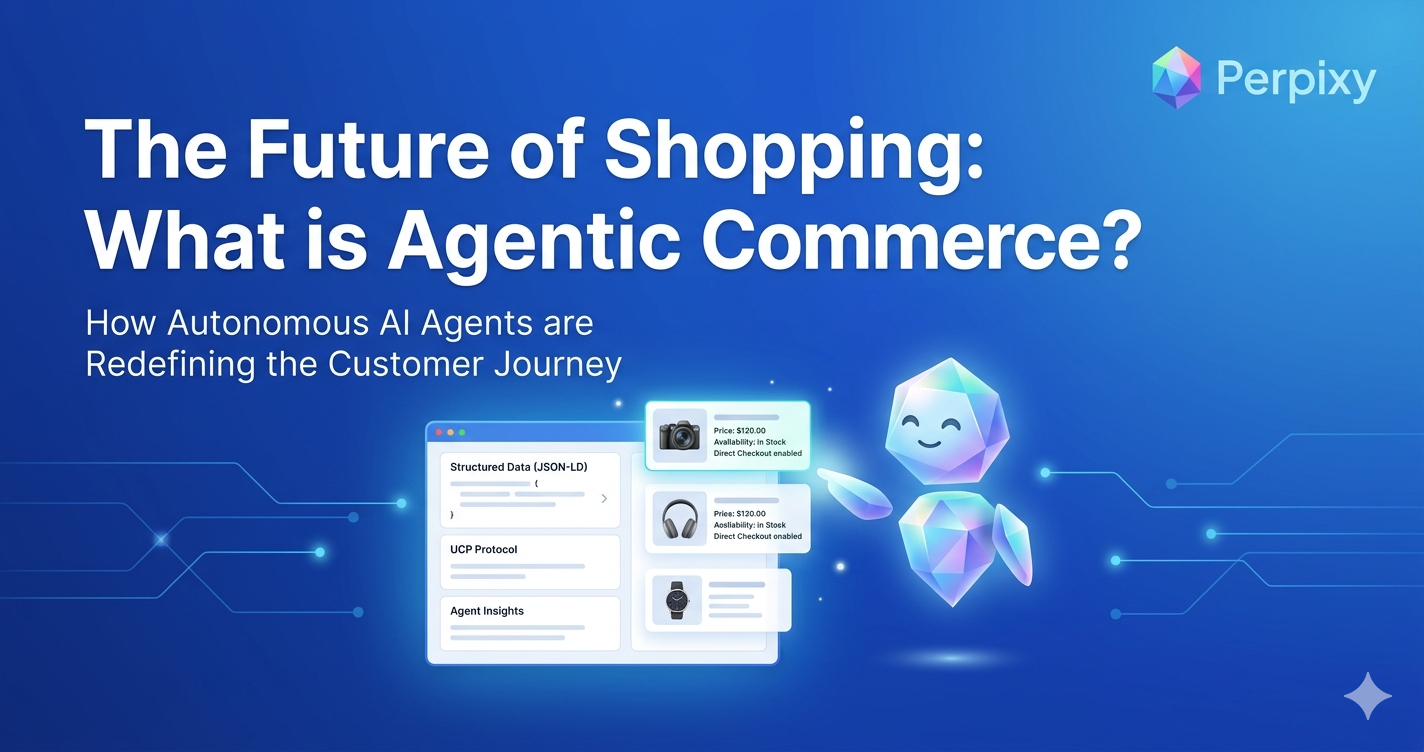
At its core, agentic commerce is the transition from "Search and Buy" to "Delegate and Approve." It is driven by AI agents—sophisticated software entities capable of understanding intent, making decisions, and executing transactions on behalf of a human user.
Unlike a standard chatbot that simply answers questions, an AI Agent can navigate the web, compare prices across different platforms, negotiate deals, and complete the checkout process with minimal human intervention.
To understand the impact, let's look at the evolution of how we buy:
| Feature | Traditional E-commerce | Agentic Commerce |
|---|---|---|
| User Role | Active searching and filtering | Setting goals and preferences |
| Process | Manual comparison and checkout | Automated execution by AI |
| Discovery | Driven by ads and SEO | Driven by utility and logic |
| Decision Making | Emotional/Impulsive | Data-driven and objective |
Several technological "stars" have aligned to make agentic commerce a reality:
Large Language Models (LLMs): AI can now understand complex, nuanced requests like "Find me a sustainable winter coat."
Interoperability: Better APIs allow AI agents to "talk" to different store inventories and payment gateways.
Personalization 2.0: Agents don't just know what you bought; they understand your values, your budget, and your schedule.
The "Always-In-Stock" Household: Your AI agent monitors your pantry and automatically orders the best-priced organic milk when you’re low, ensuring it arrives before breakfast.
The Gift Concierge: "It’s my sister’s birthday next week. She likes gardening and hates plastic. Find and buy a gift for around $50." The agent finds a hand-forged trowel and handles the shipping.
Complex Travel Planning: Instead of booking separately, you tell your agent your destination. It optimizes the entire itinerary and books it all in one go.
The biggest hurdle for agentic commerce isn't the technology—it's trust. For this to work, users must feel comfortable giving AI agents access to their credit cards and personal preferences. This is why "human-in-the-loop" systems will likely be the standard for the next few years.
Agentic commerce is turning the internet into a giant, automated concierge service. For brands, this means SEO might become less about keywords and more about being "agent-friendly." For consumers, it means getting back the most valuable resource of all: time.